Agarwood does not have one fixed aroma. Its aromatic character can vary with the tree, species, environment, resin characteristics, formation conditions, and how the material is experienced.
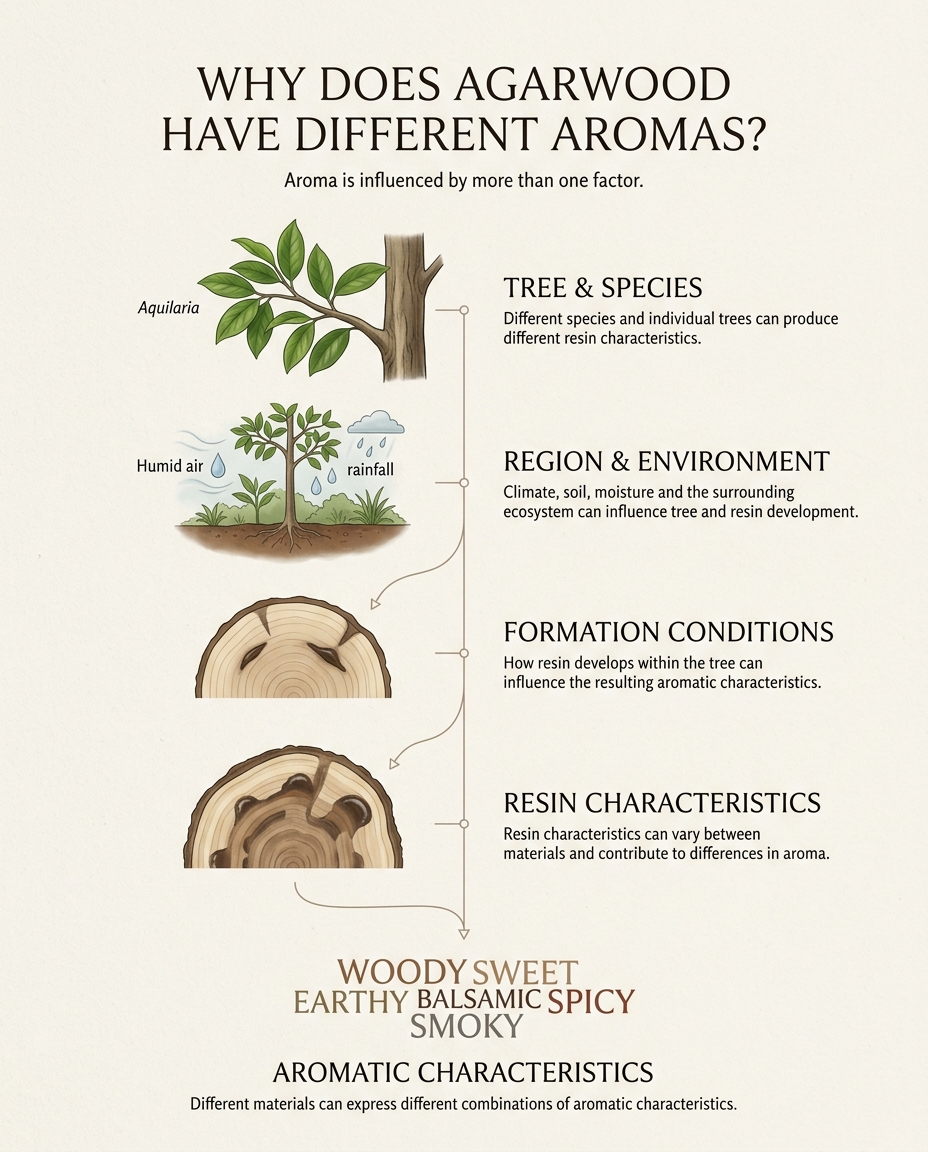
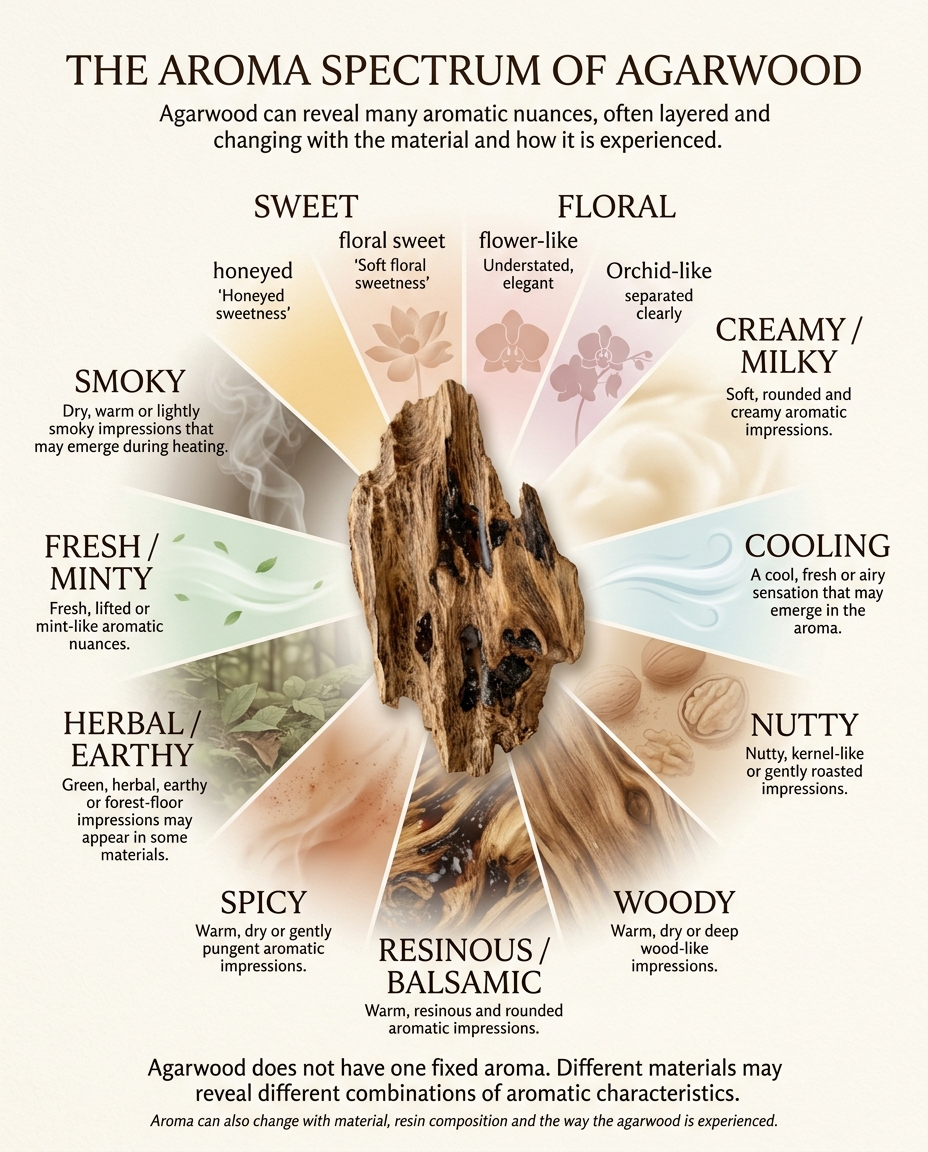
Agarwood can reveal many aromatic nuances. People may describe them as sweet, floral, honeyed, creamy, cooling, woody, resinous, spicy, nutty, herbal, earthy, fresh, or smoky.
These descriptions are not a fixed formula. Different materials can reveal different combinations and layers, and the same material may change as it is experienced.
Several factors can shape the aromatic character of agarwood.
- Tree & Species: Different Aquilaria species and individual trees can develop different resin characteristics, which can contribute to different aromatic profiles.
- Region & Environment: Climate, temperature, humidity, rainfall, soil, elevation, and the surrounding ecosystem can influence tree growth and resin development.
- Formation Conditions: The conditions under which resin develops inside the tree can affect the character of the resulting agarwood material.
- Resin Characteristics: Resin-rich areas can differ in distribution and characteristics, contributing to differences in the aroma of individual materials.
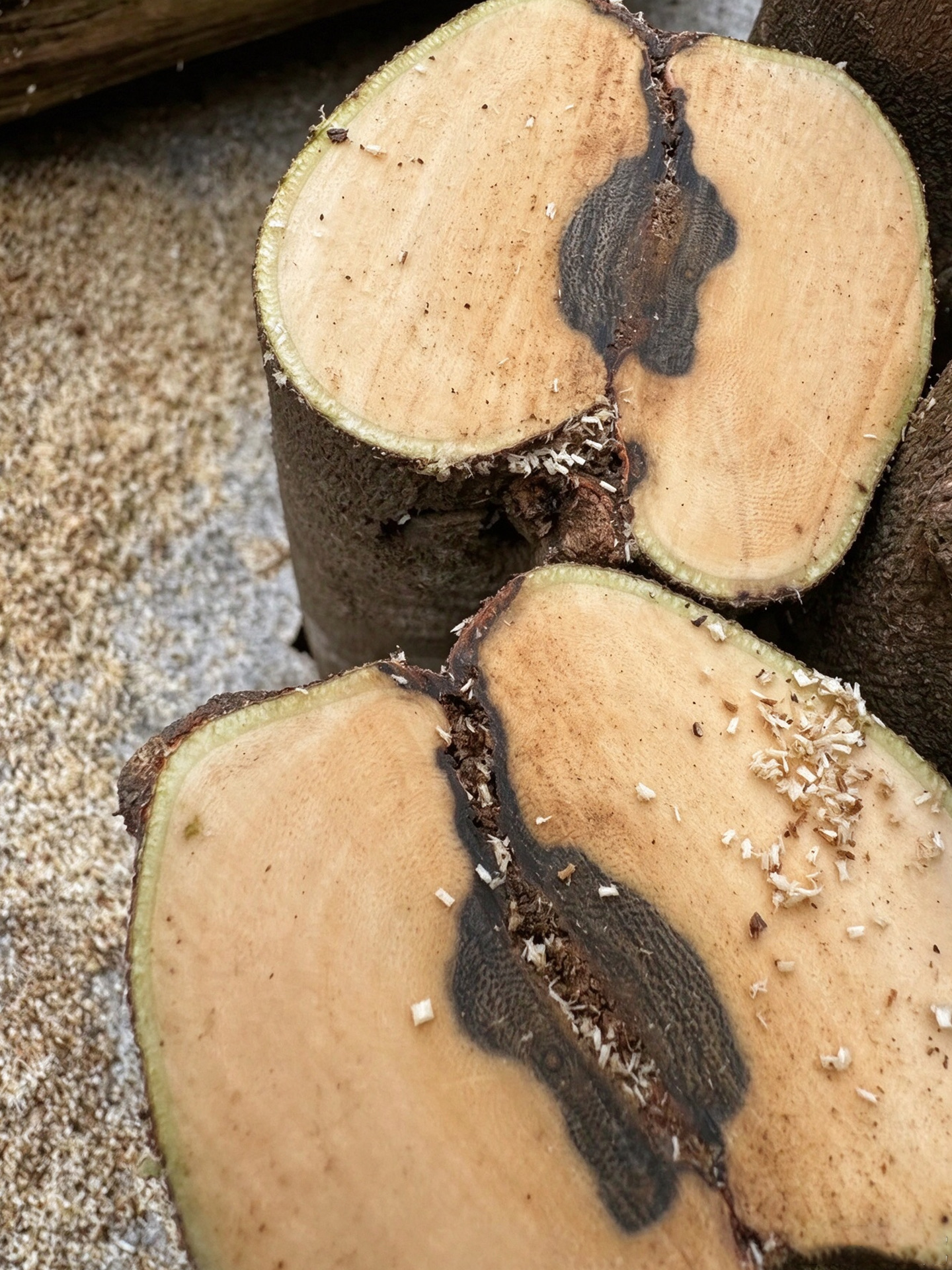
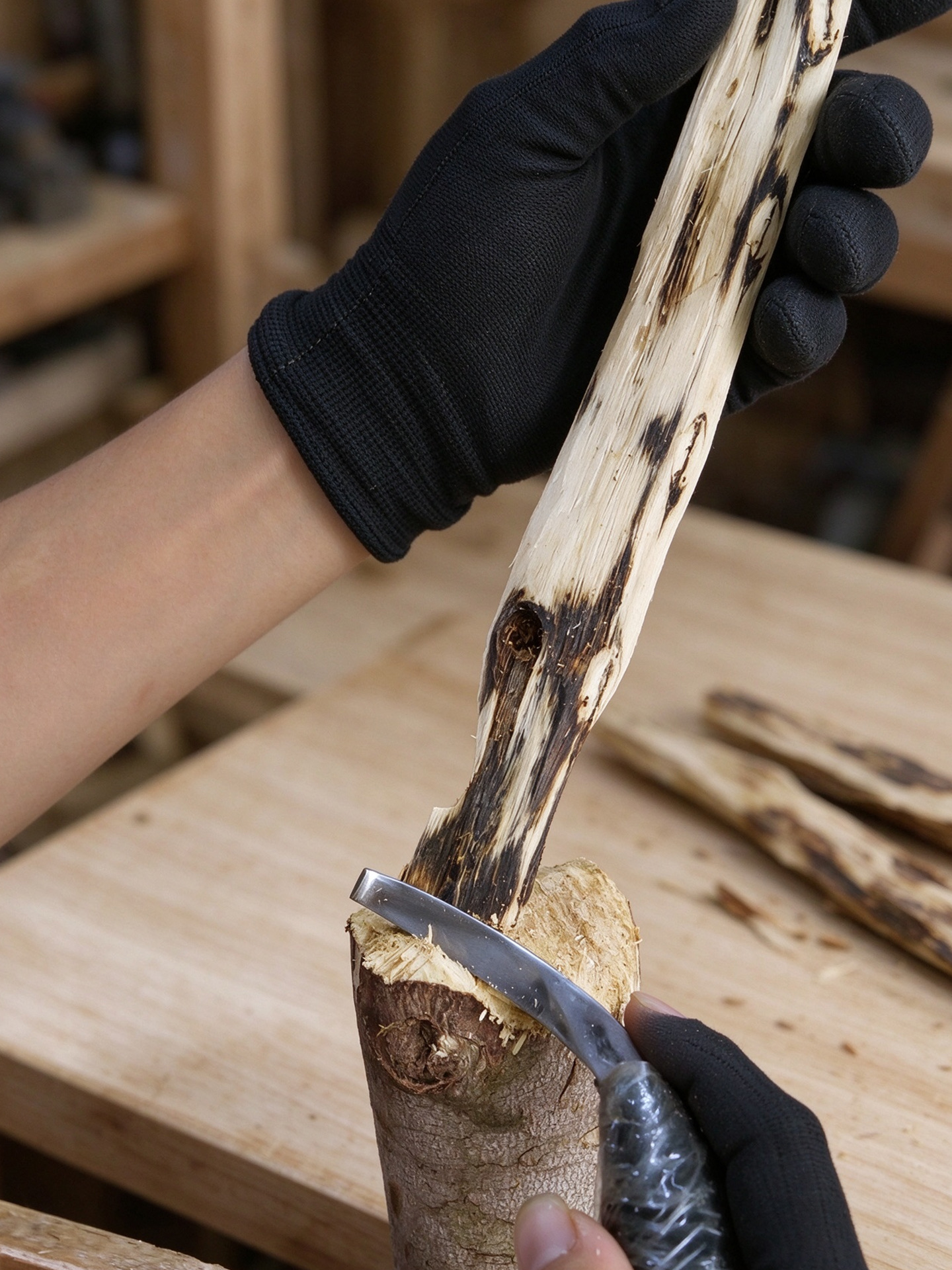
Agarwood can appear in very different natural forms as material is prepared and separated. The transition from a larger piece of wood to longer raw material and then to smaller individual pieces makes the variation of the material easier to see.
A cross-section can reveal the contrast between ordinary wood and darker resin-rich areas.
Longer pieces preserve the natural grain, shape, and distribution of resin-rich areas.
After cutting and sorting, the material appears as individual pieces with different shapes, grain patterns, and resin distribution.
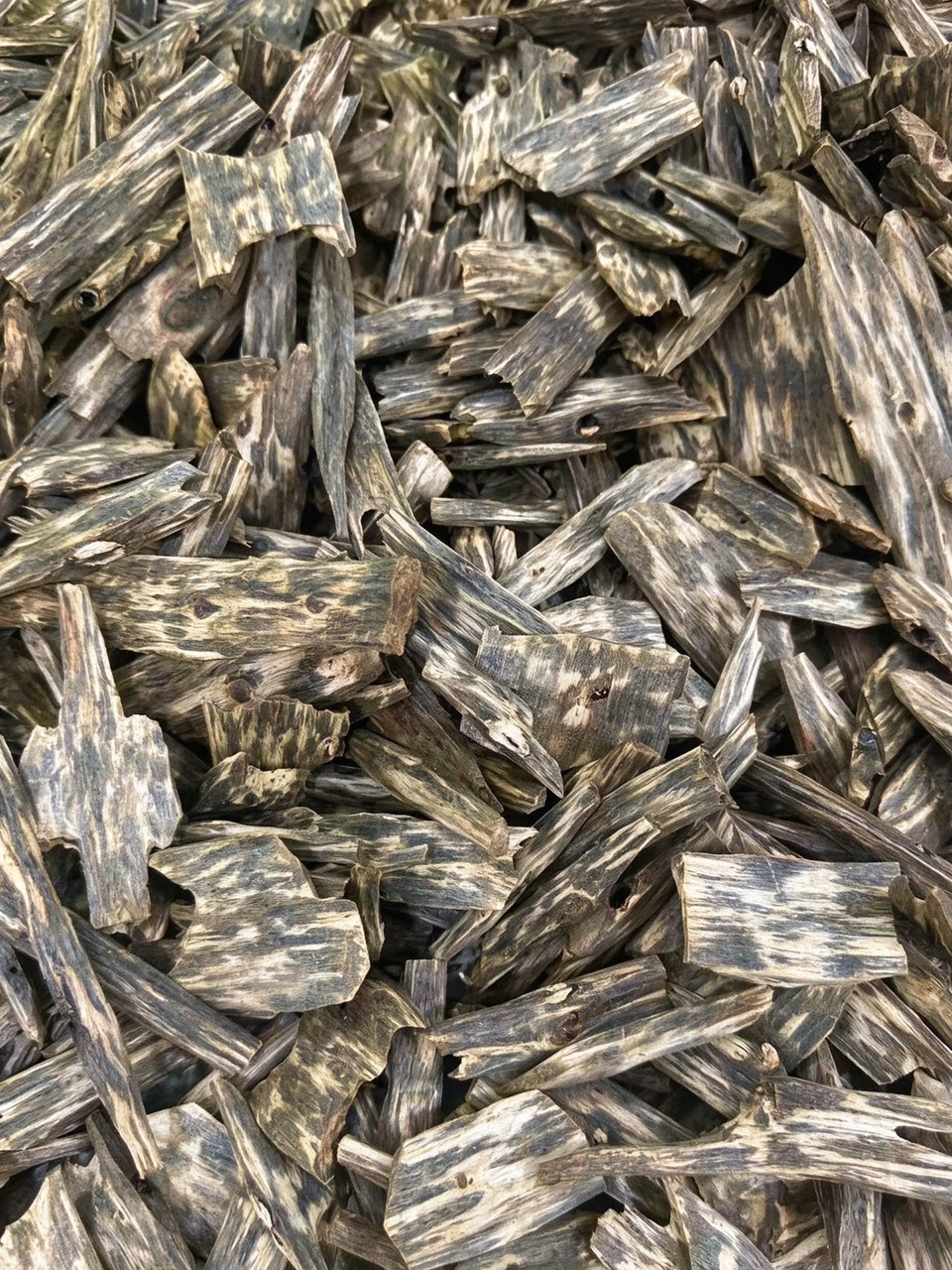
Color, shape, grain, and visible resin distribution can help us understand the material, but they do not provide a simple one-to-one prediction of aroma.
This is why two pieces that look similar can still reveal different aromatic impressions, while pieces that look different can sometimes share certain aromatic characteristics.
Aroma descriptions are a way of communicating sensory experience. They overlap, and they are not rigid chemical categories. One material may express several of these nuances at different moments.
When agarwood is heated, aromatic compounds are released more readily, making the fragrance much more noticeable than it may be at room temperature.
As heating continues, the balance of what is perceived can change. Lighter impressions may give way to deeper, warmer, resinous, sweet, spicy, or smoky impressions.
Heating is therefore part of the sensory experience, not simply a way to make an existing aroma louder.
Origin helps us understand where a material comes from and the environment in which the tree developed, but it does not determine one fixed aroma for every piece.
Species, individual trees, growing conditions, resin development, and the characteristics of the finished material can all vary. It is therefore more accurate to describe possible aromatic characteristics than to assign one aroma to an entire country or region.